
Omkeshwar Singh, Head, Rank MF, a mutual fund investment platform, will answer your queries.

Flipkart, the e-commerce company owned by Walmart, is intensifying its efforts to achieve profitability as it is eyeing a valuation of approximately $60 billion at the time of its initial public offering (IPO), now planned in 2025-2026, instead of this year, according to people familiar with the matter. The firm might consider listing in the US or any other geography, including India. The company, which counts the likes of Amazon and Reliance's JioMart among its competitors in India's burgeoning e-commerce market, had also contemplated launching an IPO in 2022-2023.

Foreign currency loans raised by Indian companies nosedived to $210 million in the September quarter (Q2), 93.3 per cent less than the year-ago period when five firms raised $3.1 billion. The Q2 amount is the lowest since December 2003 quarter when India Inc raised $191 million. Companies cited volatility in the currency markets, sharp rise in interest rates in the United States, and fund availability in India as the main reasons behind the sharp fall.

RBI's exercise will take into account standards of governance, the viability of the payment bank (PB) business model, and changes, if any, if needed.

Over the past four quarters, the Sensex companies' earnings trajectory has improved sharply because of a weak rupee.

The market capitalisation of BSE-listed firms jumped to an all-time high of Rs 304.53 lakh crore on Wednesday, buoyed by an unprecedented rally in equities where the BSE benchmark Sensex ended over the 67,000-mark for the first time ever. Rallying for the fifth day running, the 30-share BSE Sensex climbed 302.30 points, or 0.45 per cent, to end at its lifetime closing high of 67,097.44 points. During the day, it jumped 376.24 points, or 0.56 per cent, to reach its all-time intra-day peak of 67,171.38 points.

'To achieve a corpus of Rs 10 crores in the coming years, I would suggest you increase your SIP, advises Nikunj Saraf, vice president, Choice Wealth.

We asked colleagues, present and past, to reflect on a man who has made such a difference to their lives and careers. Here it is then, a rich collection of memories that offer enchanting glimpses of the enigmatic Ajit Balakrishnan.

A sluggish economy and stalled bureaucratic decision-making for the past two years thwarted capital investment and dented earnings, making it tough for the companies to raise funds.

Diverse marquee investors are becoming long-term shareholders of Jio Platforms because of a unique set of technologies and platforms under one entity.

India's shift towards US companies for technology investments and partnerships fits well with the present government's 'Atmanirbhar Bharat' and 'Make in India' initiatives, say experts.

To be fair, one year is too short a period to judge the schemes' performance.

Omkeshwar Singh, Head, Rank MF, a mutual fund investment platform, answers your queries.

Tata Consultancy Services (TCS), the group's biggest cash generator, overtook Vedanta to become the highest dividend payer in India in FY23. The IT services major paid Rs 42,090 crore for FY23, up 167.4 per cent from Rs 15,738 crore for FY22. The 10 biggest payers together shelled out Rs 2.06 trillion for FY23, more than double the Rs 98,371 crore for FY22.

Omkeshwar Singh, Head, Rank MF, a mutual fund investment platform, answers your queries.
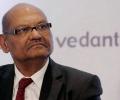
Mining magnate Anil Agarwal's conglomerate on Friday announced a major business shake-up, with flagship Vedanta Ltd approving a spin-off of its metals, power, aluminium and oil and gas businesses into separate listed entities and an overhaul of lucrative zinc unit planned as part of value creation and reducing debt load. Vedanta will issue one share of the five demerged businesses for every share held in the company, the firm said in a statement. The entire exercise, which would require shareholder and lender approval as well as a nod from the stock exchanges and courts, is expected to be completed in 12-15 months, its president for finance Ajay Agarwal said.
Equity markets rallied after softer-than-expected inflation data in the US and UK rekindled hopes of the end of the rate-hiking cycle by major central banks. The soft inflation reading drove down bond yields and the US dollar, whetting the appetite for risky assets. The 10-year US bond yield fell below 4.5 per cent after topping 5 per cent less than a month ago.

Dividend pay-out by the group companies grew at a compounded annual rate of 15.7% under Cyrus, sharply up from 2.5% in the previous three years

'A key reason for the strong interest in IPOs has been an increased focus on profitability and reasonable pricing of deals.'

Tiger Global-backed Koo, an Indian alternative to Twitter, has laid off 30 per cent of its workforce of 260 employees in the last year as the budding firm, like many other start-ups in the country, battles global headwinds. "It's important for businesses of all sizes to adopt efficient and conservative approaches to see this period through. "In line with this, we have acted on some role redundancies by letting go of 30 per cent of our workforce over the course of the year," said a Koo spokesperson.

Omkeshwar Singh, Head, Rank MF, a mutual fund investment platform, answers your queries.

Indian Economy poised for growth, say experts.

Fresh investments by corporates up just 5.8% in FY17, lowest since 1992
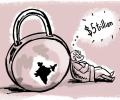
It would be a difficult task for the Indian economy to reach the $5-trillion mark a year before the International Monetary Fund (IMF) projection of 2026-27. Pankaj Chaudhary, minister of state for finance, said in the Rajya Sabha on Tuesday that the government is taking steps to make the country a $5-trillion economy at a date earlier than the IMF's projection. In that context, it would not be difficult to meet the projection in the third quarter of FY27.

PFRDA will invite bids to appoint pension fund managers.

The country's 44 fund houses together had an average AUM of Rs 9.85 lakh crore during April-June quarter of 2014-15, up from Rs 9.05 lakh crore (Rs 9.05 trillion) in the preceding three months, according to the latest data available with Association of Mutual Funds in India.

Among Sensex stocks, SBI, IndusInd Bank, HDFC Bank, Axis Bank, HDFC, Tech Mahindra, ICICI Bank, Ultratech Cement, L&T, Bajaj Finserv, Reliance, HCL Tech, Asian Paints, Wipro and M&M were the major losers. On the other hand, HUL advanced the most by 1.14 per cent. Maruti, Tata Steel, NTPC and Sun Pharma also posted gains.

Omkeshwar Singh, Head, Rank MF, a mutual fund investment platform, answers your queries.

Close to $18 billion that Reliance Jio and Reliance Retail mopped up from a slew of private equity transactions in 2020 has pushed up the money inflows through this route by 108 per cent to $33.8 billion, according to an industry report. As per the data collated by Refinitiv, private equity investments increased 108 per cent in 2020 over the previous year, with the number of deals jumping from 665 in 2019 to 791 in 2020 at $33.8 billion, despite the pandemic. In 2019, total PE deals stood at $16.2 billion. Most of the fund inflows were in the third quarter, fetching $24 billion, which, however, tapered off in Q4 to just about $4.57 billion, as per the data from the agency that tracks financial transactions at a global level.

Omkeshwar Singh, Head, Rank MF, a mutual fund investment platform, answers your queries.

Reliance Mutual Fund topped the AUM chart with its AUM in excess of Rs 660 billion, while ICICI Prudential Mutual Fund came second with an AUM of Rs 487 billion.

Oravel Stays - which operates hospitality tech firm OYO - on Friday pre-filed its Draft Red Herring Prospectus with stock market regulator Sebi, sources said. Sources close to the company told PTI, OYO may launch its initial public offering (IPO) around Diwali this year. Unlike the traditional route where companies have to launch the IPO within 12 months from the Sebi approval, or final observation; in the pre-filing route, an IPO can be floated within 18 months from the date of Sebi's final comments.

India will need $223 billion of investment to meet its goal of wind and solar capacity installations by 2030, according to a new report by research company BloombergNEF (BNEF). The government has set a target of increasing non-fossil power capacity to 500 GW by 2030. It wants non-fossil fuel power sources to provide half of its electricity supply by 2030. "To achieve this target, India needs to massively scale up funding for renewables," the report said, adding that $223 billion is required over the next eight years just to meet the solar and wind capacity targets.

India's inclusion in JP Morgan's bond index can channel billions of dollars into India. How will the government securities market handle it?

Omkeshwar Singh, Head, Rank MF, a mutual fund investment platform, answers your queries.

'We never go overboard on any stock, no matter how good it may seem.'
Equity benchmarks extended their decline for the fourth straight session on Wednesday, with the Sensex falling 214.85 points after the Reserve Bank raised the key interest rate by 50 basis points. Continuous foreign fund outflows and surging crude oil prices also weighed on markets. The 30-share BSE benchmark dropped 214.85 points or 0.39 per cent to settle at 54,892.49.

Equity benchmarks shrugged off lacklustre global cues to clock smart gains on Tuesday, buoyed by strong buying interest in index heavyweights Reliance Industries and HDFC twins. However, a depreciating rupee and unabated foreign fund outflows capped the gains, traders said. The 30-share BSE Sensex rallied 562.75 points or 0.94 per cent to settle at 60,655.72.

Their startup investments number 13 so far, compared to 17 deals in 2020.

Private equity investments in Indian companies grew 38 per cent to $62.2 billion last year, with inflows into Reliance Industries' telecom and retail ventures contributing nearly 40 per cent of the total value of the deals, a report said on Wednesday. Barring investments into Jio Platforms and Reliance Retail, the total deal value was down by 20 per cent over 2019 as the volume of large deals of more than $100 million dipped by a fourth, as per the report by Bain & Company and India Venture Capital Association. Overall investment activity remained muted from March to May last year due to COVID-led uncertainties and investor confidence recovered strongly in the second half to pre-COVID levels with late-stage and buyout deals witnessing increased traction, it said.
